Resume vs CV: The Difference Depends on Where You Apply, Not Just How Long It Is

Short answer
In the US, a resume is a one-to-two-page summary of the experience relevant to one job, while a CV (curriculum vitae) is a complete, multi-page record of an academic or research career. Outside North America, "CV" is usually just the everyday word for a resume. For most US jobs, send a resume.
The short version: in the United States, a resume and a CV are two different documents. Almost everywhere else, they are two names for the same one. That second half is where most of the confusion comes from, and it is why the answers you find online seem to contradict each other. A US university career center will tell you a CV runs to many pages and lists every publication you have ever written. A UK careers site will tell you a CV should be tight, tailored, and about two pages. Both are right. They are describing different documents that happen to share a name. We have seen this from both sides. ATSOptimized was first built for German-speaking job seekers, where the document is a Lebenslauf and is conventionally called a CV in English, before we rebuilt it for the US market. The two conventions differ in more than the name: what goes in, how long it runs, and which personal details are expected — or are a liability. So the useful question is not "what is the difference between a resume and a CV" in the abstract. It is which document is the employer in front of you actually asking for. This guide answers that for the US first, then for applications abroad, and finishes with how to turn one into the other without starting from scratch.
The difference in one table
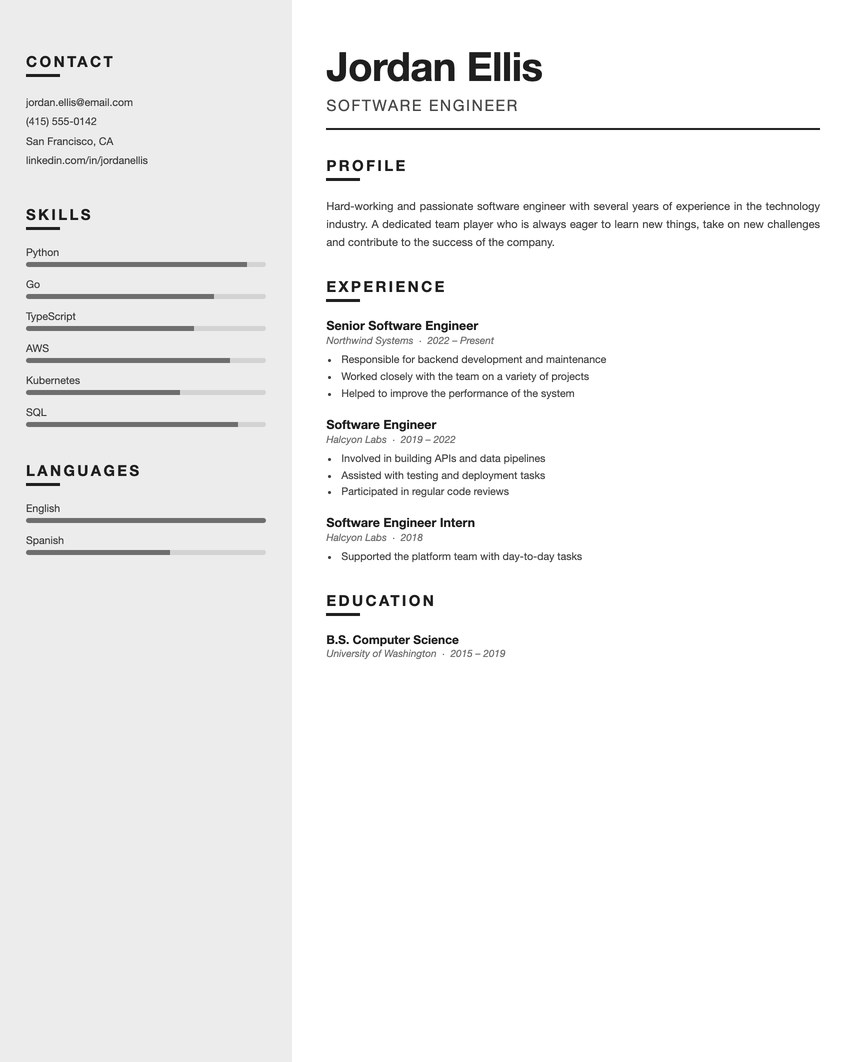
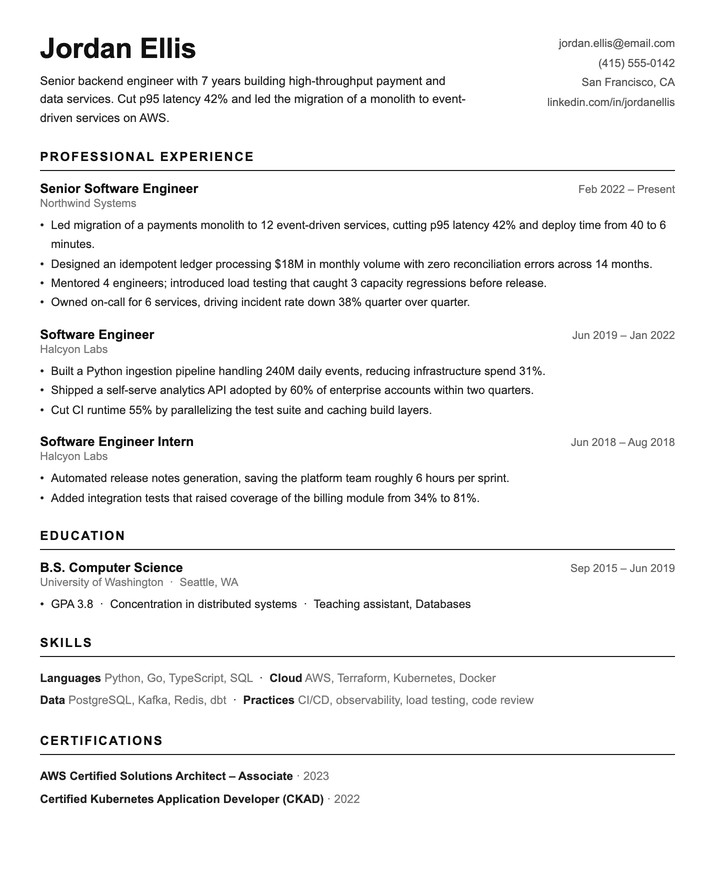
In the US sense of the two words, the documents differ on almost every dimension. The groups below compare them side by side. The single most important line is purpose. A resume is an argument: it selects the evidence that you fit one specific job and leaves the rest out. A CV is a record: it is complete by design, and leaving something out is closer to an error than a choice. Everything else — length, ordering, how often you tailor it — follows from that difference.
17 examples across 3 groups
Resume (US) (6)
CV (US academic sense) (6)
CV (UK, Europe and most of the world) (5)
Where the words come from
The names describe the difference better than most explanations do. Curriculum vitae is Latin for "the course of (one's) life," according to Merriam-Webster. The word curriculum comes from currere, "to run" — the same root as course and courier. A CV, by its name, is the whole run of your career. Résumé is French for "summary." A resume, by its name, is the abridged version. So the etymology already contains the rule: one document is the full account, the other is the edited highlights. American English kept that distinction because American academia kept using the long document while every other industry moved to the short one. British English collapsed both into "CV," and "résumé" never caught on. On spelling: resume, résumé and resumé are all accepted in American English. Applicant tracking systems treat them identically, so pick one and use it consistently. Plain resume is the safest choice in a file name, since some upload forms mangle accented characters.
When a US employer actually wants a CV
If you are applying in the United States and the posting does not specify, send a resume. A CV is the expected document in a fairly narrow set of situations: Academic hiring. Faculty positions, lecturer roles, postdocs, and most research appointments at universities. Search committees read the full record because publications, funding history and teaching load are the qualifications. Research and scientific roles. Government labs, research institutes, and some R&D positions in pharma and biotech — particularly when the role is research-track rather than commercial. Medicine. Residency and fellowship applications, academic medicine, and physician hiring generally use a CV, because licenses, training, board certifications, research and presentations all need to be listed in full. Fellowships and grants. Many funders ask for a CV, but read the instructions closely: large funders often require their own fixed format with a page cap, which is neither a resume nor a traditional CV. When the posting says "CV" and the employer is international. A US-based job at a European or Asian company that asks for a "CV" usually means a two-page resume, not a twelve-page academic record. When in doubt, look at the role: a sales manager position asking for a CV wants a resume; a research scientist position asking for a CV may want the long version. One trap: US federal jobs are not CV territory. Federal resumes used to be famously long, but the US Office of Personnel Management introduced a two-page limit for resumes submitted through USAJOBS, effective September 27, 2025. An old five-page federal resume will now be rejected at upload. Federal resumes still need detail that private-sector resumes skip — dates by month and year, and hours worked per week — so check the announcement's instructions.
What "CV" means outside the US
If you are applying abroad, or to an employer that hires internationally, "CV" almost always means a resume-length document. What changes from country to country is not the length but which personal details are expected, and that is where US applicants and international applicants both get caught out. The groups below cover the conventions we see most often. Treat them as defaults, and let the job posting override them.
17 examples across 4 groups
United Kingdom & Ireland (4)
Germany, Austria & Switzerland (5)
Rest of the EU (4)
Canada & Australia (4)
Photos, birth dates and other details: where the two diverge most
Length is the difference everyone talks about. Personal details are the difference that actually costs people interviews. For a US resume, leave them out. No photo, no date of birth, no marital status, no nationality, no religion. This is not just style. The US Equal Employment Opportunity Commission says employers should not ask for a photograph of an applicant before an offer, because it tends to disclose race. US recruiters and HR systems are trained around that, so a photo on a resume reads as unfamiliar with American norms at best — and some employers discard photo resumes outright to avoid any appearance of bias. For a UK CV, the same applies. The National Careers Service states plainly: "You should not include your age, your date of birth, whether you're married or your nationality." For a German Lebenslauf, the default is different. Since Germany's General Equal Treatment Act (AGG) took effect in 2006, an employer cannot require a photo, so it is legally optional. In practice, many German employers still expect one, and a Lebenslauf without a photo is noticeably less common than one with. This is the convention our product originally had to support, and it is the clearest example of why copying a "CV template" from another country can backfire. The practical rule: a photo is a regional convention, not a CV feature. Sending a CV to a US employer is not a reason to add one, and sending a resume to a German employer is not a reason to leave one off.
Does an applicant tracking system care which one you send?
No. ATS software does not read the word "CV" or "resume" on your document and treat it differently. Workday, Greenhouse, iCIMS, Lever and similar systems parse whatever you upload into the same fields: contact information, work history, education, skills. The upload button may be labeled "CV," "resume," or "CV/resume," and they all lead to the same parser. What the ATS does care about is the content and the layout, and that is where long academic CVs run into trouble when they are sent to industry jobs: Non-standard section headings. A CV has sections like "Peer-Reviewed Publications," "Invited Talks" and "Grants and Fellowships." A parser looking for work history may not know what to do with them, and your actual employment can end up buried or mis-filed. Keyword dilution. A recruiter searching the ATS for "Python" or "stakeholder management" sees your document ranked against others. Twelve pages of citations dilute the handful of lines that match the posting. That is the core of what ATS optimization actually means: matching the posting with relevant, truthful content, not adding volume. Length itself. The ATS will store all twelve pages. The recruiter reading it afterwards will not. So if you are a researcher applying outside academia, the question is not whether the system will accept a CV. It will. The question is whether the person reading the parsed result will find the evidence for the job — and in a twelve-page document, they usually won't.
How to turn a CV into a resume
This is the conversion most people actually need: an academic, PhD or physician moving into industry. It is mostly subtraction, done in a specific order. 1. Start from the job posting, not the CV. List the five or six requirements the posting cares most about. Everything on the new resume has to support one of them, or it goes. 2. Collapse publications into one line or one short section. "Author of 14 peer-reviewed papers in computational biology, including 3 first-author publications in Nature Methods and Bioinformatics" does the work of three pages. Keep individual citations only when a publication is directly relevant to the role. 3. Rewrite research as work experience. Your postdoc or PhD is a job. Give it a title, an institution, dates, and bullet points that describe what you did in the vocabulary of the posting: "Built and maintained a Python pipeline processing 2 TB of sequencing data per week" rather than "Investigated transcriptional regulation in…" 4. Translate academic terms. "Principal investigator" can become "project lead"; "managed a lab of six" is people management; "secured $420,000 in NIH funding" is a budget and a fundraising result. Only translate what is true — the point is to make real experience recognizable, not to inflate it. 5. Cut teaching, service and conference lists unless the job values them. A corporate training role may want your teaching. A data science role almost never wants your committee work. 6. Get to two pages, then check the format. Use a single-column, reverse-chronological layout with standard headings — Summary, Experience, Education, Skills — and a readable, standard font. Going the other direction, resume to CV, is usually simpler: you are adding sections, not cutting them. Add publications, presentations, grants, teaching and professional memberships in full, ordered by what the hiring committee values most.
Which one should you send? A quick decision guide
Work through these in order and stop at the first one that applies. 1. The posting names a format or a page limit. Follow it exactly. An explicit instruction beats every convention on this page. 2. You are applying to a faculty, postdoc, research-track or academic medicine role. Send a full CV. 3. You are applying to any other job in the US — including government jobs. Send a resume, one page if you have under about ten years of experience, two if you have more. 4. You are applying in the UK, Ireland, the EU or most other countries, and the posting asks for a CV. Send a two-page, resume-length CV, adjusted for that country's personal-detail norms. 5. You are applying to a German-speaking employer. Send a tabular Lebenslauf, usually with a photo, as part of a complete application. 6. You genuinely cannot tell. Send a two-page resume. A tight, relevant document is almost never the wrong choice, while a twelve-page CV sent to a commercial role often is. Whatever you send, the more important decision comes after this one: tailoring it to the job. A resume or CV that matches the posting's real requirements will outperform a generic one in either format, and that is true in every country listed above.
Example phrases
Examples
- CV: "Smith, J., Lee, K., & Patel, R. (2024). Single-cell analysis of… Nature Methods, 21(4), 512–520." (plus 13 more citations) Resume: "Published 14 peer-reviewed papers, including 3 first-author articles in Nature Methods and Bioinformatics."
- CV: "Postdoctoral Research Fellow, Department of Genetics, 2022–present." Resume: "Postdoctoral Researcher — Built a Python pipeline processing 2 TB of sequencing data weekly, cutting analysis time from 5 days to 8 hours."
- CV: "Principal Investigator, NIH R21 grant, $420,000, 2023–2025." Resume: "Led a two-year, $420K funded research project, managing budget, timeline and a team of four."
- CV: "Teaching Assistant, BIO 201, BIO 305, BIO 410 (six semesters)." Resume (for a training role): "Taught six semesters of undergraduate biology to classes of 40–120 students; course evaluations averaged 4.7/5."
- CV: "Invited Talks" section with 9 entries. Resume: "Presented research at 9 national conferences, including two invited keynotes."
- CV: "Departmental Graduate Admissions Committee, 2021–2023." Resume: Delete it unless the role involves hiring, admissions or selection.
- UK CV header: Name, phone, email, LinkedIn, town. German Lebenslauf header: Name, address, phone, email, often date of birth and a photo.
- Wrong for the US: "Date of birth: 14 March 1991 · Nationality: Italian · Married." Right for the US: Remove the line entirely; add work authorization only if the posting asks.
Pro tips
- If the posting says "CV" but the employer is not academic, medical or research-focused, it almost certainly wants a resume-length document.
- Never add a photo to a US or UK application, even if the posting calls the document a CV.
- Keep a master CV with everything in it, and cut a tailored resume from it for each application — it is much faster than building each one from scratch.
- Converting a CV to a resume? Collapse your publication list into one sentence with a count and your strongest venues.
- Name the file plainly — "Firstname-Lastname-Resume.pdf" — and avoid accented characters, which some upload forms mangle.
- Applying to a US federal job? Your resume must fit two pages on USAJOBS, but still include month-and-year dates and hours per week.
- When a funder asks for a CV, check whether they mean their own fixed-format template; many large grant programs do.
Related terms
Frequently asked questions
What is the main difference between a CV and a resume?
In the US, a resume is a short, selective document — one to two pages — tailored to show you fit one specific job, while a CV is a complete record of an academic or research career that can run to ten pages or more. The resume is an argument; the CV is an archive. Outside North America, though, "CV" is usually just the normal word for a resume-length document, so the difference depends on where you are applying.
Is a CV the same as a resume?
It depends on the country. In the United States they are different documents: a resume for most jobs, and a long-form CV for academia, research and medicine. In the UK, Ireland, most of Europe, Asia and Africa, "CV" is the everyday term for what Americans call a resume, typically about two pages. In Canada and Australia the two words are often used interchangeably. If a non-academic employer asks for a CV, a resume-length document is almost always what they want.
What does CV stand for?
CV stands for curriculum vitae, Latin for "the course of (one's) life." The name reflects what the US academic version is: a complete account of your career rather than a selection. Résumé, by contrast, is French for "summary." The plural is curricula vitae, though "CVs" is far more common in everyday writing and is perfectly acceptable.
Should I send a CV or a resume for a job in the US?
A resume, unless you are applying for a faculty, postdoc, research-track or academic medicine position, or the posting explicitly asks for a full CV. That includes US federal jobs: since September 27, 2025, resumes submitted through USAJOBS are limited to two pages. If a US posting from an international company asks for a "CV" for a commercial role, send a two-page resume.
How long should a CV be?
A US academic CV has no fixed limit and grows with your career — two or three pages for a graduate student, often ten or more for senior faculty. A CV in the UK and most of Europe is a different document and is typically about two pages. When a posting or funder states a page limit, that limit overrides both conventions.
Should I put a photo on my CV?
Not for the US, UK, Ireland, Canada or Australia. The US Equal Employment Opportunity Commission advises employers not to request applicant photos before an offer, and many US employers discard photo resumes to avoid any appearance of bias. Germany, Austria and Switzerland are the main exception: a photo is legally optional in Germany, but it is still common on a Lebenslauf. Follow the convention of the country you are applying in, not the name of the document.