What Does ATS-Optimized Mean? What the Software Actually Does With Your Resume

Short answer
An ATS-optimized resume is one an applicant tracking system can read accurately and that a recruiter will find when searching or ranking candidates. In practice that means three things: a file whose text extracts cleanly, standard section headings and a simple layout, and wording that uses the job posting's own terms wherever they truthfully describe your experience.
"ATS-optimized" is printed on half the resume templates on the internet, usually with no explanation of what it is supposed to mean. It sounds like a technical certification. It is not one. There is no standard, no test, and no body that grants it. An applicant tracking system (ATS) is the software employers use to receive and manage applications: Workday, Greenhouse, iCIMS, Lever, Taleo, and dozens of smaller ones. When you apply, the ATS stores your file, parses it into structured fields (name, job titles, dates, skills), and puts you in a pipeline a recruiter works through. Recruiters then search, filter, and sometimes rank that pipeline. So "ATS-optimized" can only sensibly mean two things: the software reads your resume correctly, and the recruiter using that software finds it. Everything useful about the term comes back to those two goals. Anything that promises more, such as "beating the bots" or a guaranteed pass, is selling something the software does not do.
What an applicant tracking system actually does with your resume
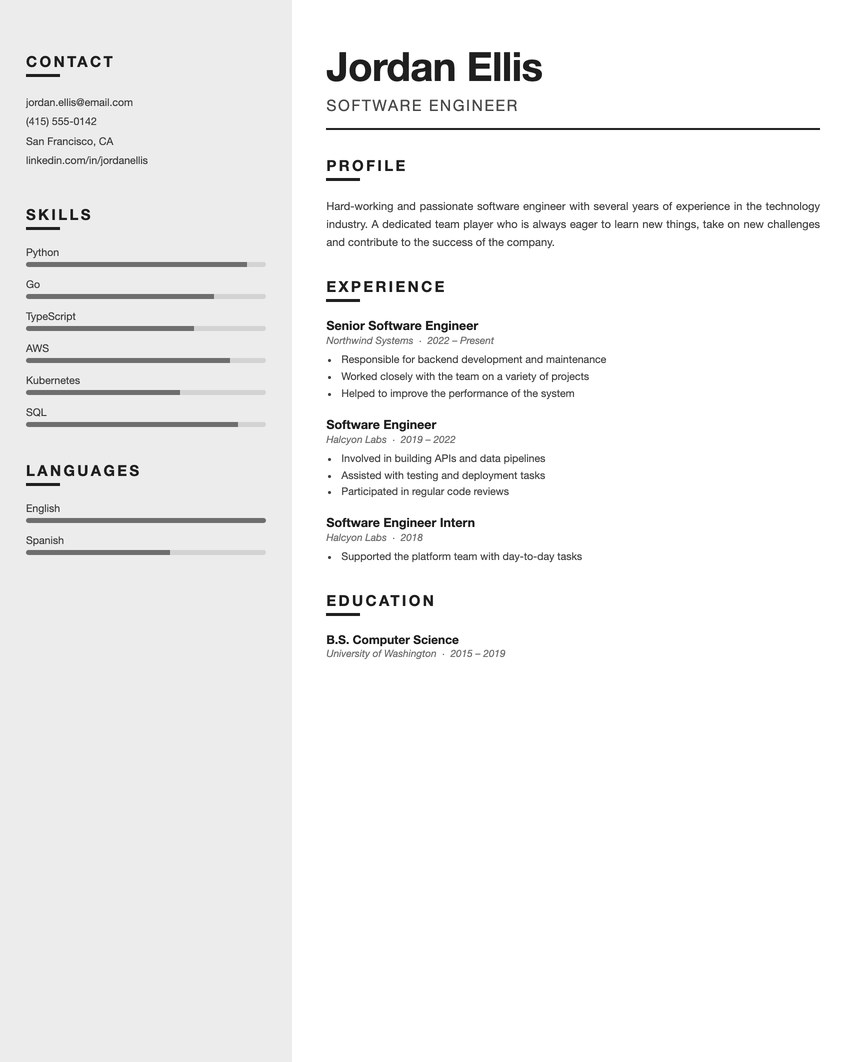
It helps to separate the three jobs an ATS does, because the advice differs for each. 1. Storage. Your file is saved against the job and your candidate profile. Nothing can go wrong here that you control. 2. Parsing. The ATS extracts the text layer of your file and tries to sort it into fields. This is where formatting matters. A parser reading a two-column layout may interleave the columns line by line; one reading a header or text box may skip it entirely; one reading a PDF with broken font encoding may get gibberish. When parsing fails, the recruiter sees a profile with missing or scrambled fields, even though your PDF looks perfect on screen. 3. Search and ranking. Recruiters type queries like "registered nurse" AND telemetry or filter by a knockout question ("Are you authorized to work in the US?"). Some systems also show a relevance or match score next to each candidate. Your resume is found when the words a recruiter searches for are actually in it. What most ATS software does not do is read your resume and autonomously decide to reject you. Automatic rejections almost always come from knockout questions on the application form (work authorization, required license, willingness to relocate), not from a judgment about your resume's quality. The resume's job is to be parsed correctly and to surface in search.
The three things an ATS-optimized resume gets right
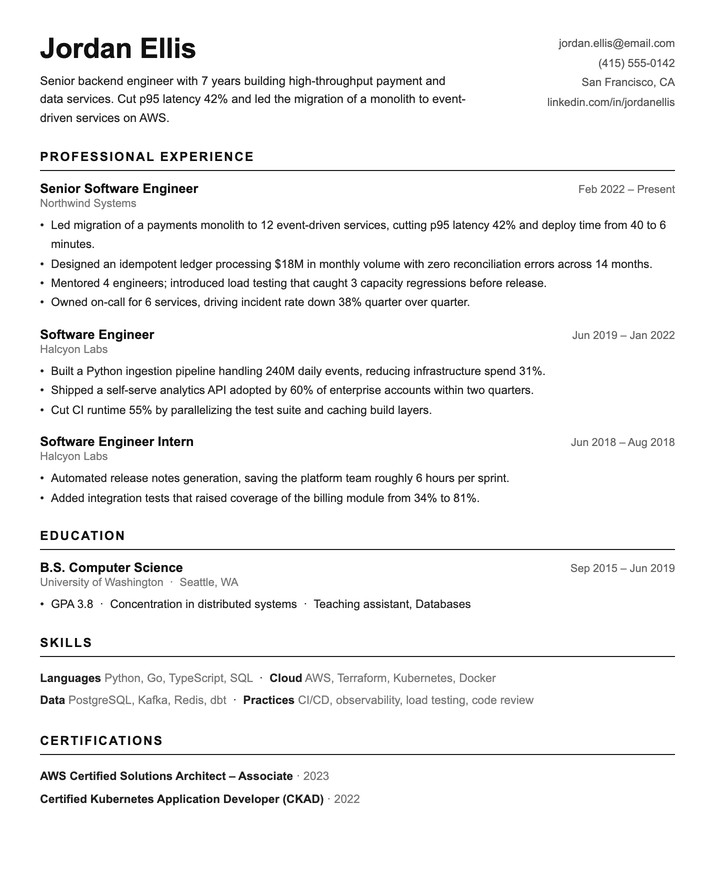
Readable text. The file's text has to extract cleanly. Export from Word or Google Docs as PDF or DOCX, keep text out of images, headers, footers, and text boxes, and avoid design-tool exports with exotic fonts. Our guide to resume fonts explains the specific encoding bug that turns "Certified" into "Certi ed" in the extracted text, and how to test for it. Predictable structure. Use a single column, plain section headings the parser expects (Experience, Education, Skills, Certifications), and a consistent date format next to each role. Creative headings such as "Where I've Made an Impact" are harder for parsers to classify, and that costs you nothing to avoid. A reverse-chronological layout is the format parsers handle most reliably. The job's own vocabulary. If the posting asks for "accounts payable" and your resume says "vendor invoicing," a recruiter searching for accounts payable will not find you, even though you did the job. Optimizing means using the posting's exact terms for skills, tools, certifications, and job titles wherever they honestly describe what you did. Spell out acronyms once ("Certified Public Accountant (CPA)") so both versions match a search.
What ATS-optimized does not mean
It does not mean keyword stuffing. Pasting the job description in white text, or a block of 60 keywords at the bottom, is visible the moment a recruiter opens the parsed profile, and it ends the application faster than any parser would. It does not mean claiming skills you lack. Adding a keyword for a tool you have never used may get you into a search result. It will not get you through a phone screen, and it is the kind of thing that gets offers withdrawn. Optimization works only on true information: reword what you did, never invent what you didn't. It does not mean ugly. A clean single-column resume with one accent color, clear hierarchy, and a standard font is fully parseable. "ATS-friendly" does not require Times New Roman and no formatting at all. It does not mean 75% of resumes are auto-rejected. That figure circulates widely and traces back to a vendor's marketing claim from over a decade ago, with no published study behind it. The real risk is quieter: a recruiter with 300 applicants searches, sorts, and reads the top of the list. Being parsed wrong or missing the key terms means you are never near the top.
How to check whether your resume is ATS-optimized in five minutes
Step 1: The copy-paste test. Open your PDF, select all, and paste into a plain text editor. If the order is scrambled, columns are interleaved, words are missing, or you see odd symbols, a parser will see the same thing. This is the single most useful check, and it is free. Step 2: The heading test. Scan your section headings. Would a stranger know instantly which section is your work history? If a heading is clever, make it plain. Step 3: The vocabulary test. Take the job posting and highlight every hard skill, tool, certification, and the job title itself. For each one you genuinely have, check that it appears in your resume in the same wording. The ones you don't have are not a problem to solve by editing; they are information about fit. Step 4: The dates test. Every role should have a start and end month and year in the same format. Parsers use these to calculate years of experience, which recruiters often filter on. If you would rather not do step 3 by hand for every application, this is exactly what ATSOptimized automates: it compares your resume with the job description, shows which relevant terms are missing, and rewrites your existing experience to match, without adding anything you did not do.
Is an ATS score meaningful?
Many tools, including ours, show an "ATS score" or match percentage. It helps to be clear about what that number is. An ATS score from a third-party tool is an estimate of how well your resume matches a specific job description: how many of the posting's important terms appear, and whether the file parses cleanly. It is a useful checklist and a fast way to compare two drafts. It is not the number the employer's ATS shows the recruiter, because each vendor calculates relevance differently and most do not publish how. Use it the way you would use a spell checker: a high score means you have removed the avoidable problems. It does not guarantee an interview, and chasing 100% by adding terms that are not true makes the resume worse, not better.
ATS-optimized versus ATS-friendly versus tailored
These terms are used interchangeably, but there is a useful distinction. ATS-friendly usually describes a template or format: single column, standard headings, parseable file. It is a property of the design and is the same for every job. Tailored describes content: the resume has been adjusted for one specific posting. ATS-optimized, used precisely, is both together: a format the software reads correctly, with content tailored to the job's vocabulary. An ATS-friendly template with generic content is still easy to overlook, and a perfectly tailored resume in a three-column design may never be parsed properly. You need both halves. See our ATS resume example for what that looks like on a full page.
Example phrases
Examples
- Not optimized: "Handled vendor invoices and payments." Optimized (posting asks for accounts payable, three-way match, SAP): "Processed 350+ accounts payable invoices monthly in SAP, resolving three-way match exceptions within 48 hours."
- Not optimized: "Looked after patients on a busy ward." Optimized (posting asks for telemetry, patient education): "Monitored 5 to 6 telemetry patients per shift and delivered discharge education to patients and families."
- Not optimized: "Helped customers with problems." Optimized (posting asks for Zendesk, CSAT, escalations): "Resolved 60+ Zendesk tickets daily with a 94% CSAT score; handled tier-2 escalations for billing disputes."
- Not optimized: "Section heading: My Journey." Optimized: "Section heading: Experience."
Pro tips
- Run the copy-paste test on the exact file you will upload, not the document you edit. Exports change things.
- Keep a master resume with everything you have done, then tailor a copy per application. Tailoring means selecting and rewording, not inventing.
- Mirror the posting's job title in your summary line if it honestly describes the role you are targeting. Recruiters search by title more than any other term.
- Put skills in context. "Reduced month-end close from 8 to 5 days using NetSuite" matches the same search as a skills list entry and also convinces the human reading it.
- If the application form offers both a resume upload and manual fields, fill in the fields. Some systems search the form data, not the parsed file.
Related terms
Frequently asked questions
What does ATS-optimized mean on a resume?
It means the resume can be read accurately by an applicant tracking system and will be found when a recruiter searches it: a cleanly extractable file, standard headings and layout, and the job posting's own terms used wherever they truthfully describe your experience.
Does an ATS automatically reject resumes?
Rarely on the basis of the resume itself. Automatic rejections usually come from knockout questions on the application form, such as work authorization or a required license. The bigger risk is being parsed incorrectly or missing key terms, so you never appear near the top of a recruiter's search.
Is a PDF or Word document better for ATS?
Modern ATS software reads both. A PDF exported from Word or Google Docs is usually fine. If the posting asks for a specific format, use it. Whichever you choose, run the copy-paste test on the exact file you upload.
How many keywords should an ATS-optimized resume have?
There is no target number. Include the posting's important skills, tools, certifications, and job title wherever you genuinely have them, in context within your experience bullets. Adding terms you cannot back up hurts you at the interview stage.
Do I need a different resume for every job?
Your format can stay the same, but the wording should be adjusted for each posting so its key terms appear. Most people keep one master resume and tailor a copy per application, or use a resume optimizer to do the comparison for them.
Can a nicely designed resume still be ATS-optimized?
Yes. A single-column layout with clear headings, one accent color, and a standard font is fully parseable. What breaks parsing is multiple columns, tables, text boxes, text in headers or images, and unusual fonts, not visual polish.